
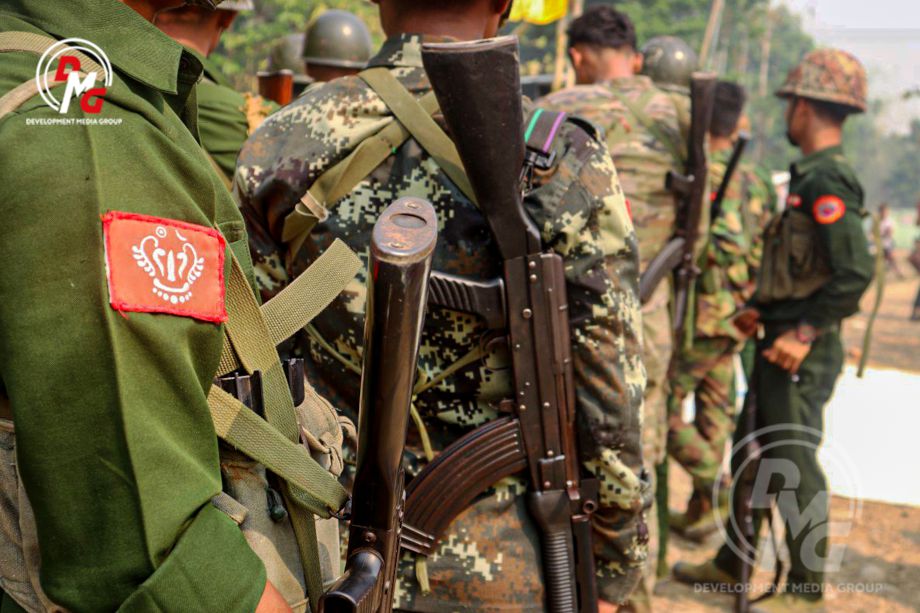
Rohingya residents in northern Maungdaw Township report a sharp rise in harassment, intimidation, and violent behavior by armed members of the Arakan Army (AA), heightening fear in an already volatile region.
Villagers from Zone Six—covering Mingalar Gyi, Kyauk Lyu Khar, Tharye Auk, Hla Baw Zaar, and Pyin Phyu—say AA soldiers have been entering local shops and taking items without payment. According to a Rohingya Khobor report, shopkeepers allege that soldiers routinely demand food, drinks, cigarettes, and other goods while acting with unchecked authority.
One shopkeeper said he was punched after requesting payment for soft drinks, betel nut, and noodles taken by AA soldiers. He added that two full packs of cigarettes were seized last week by a group of soldiers who “walked out laughing.” Other villagers reported that soldiers threaten shopkeepers who refuse credit, verbally abuse them, and forcibly take shop goods, leaving small business owners unable to restock and sustain their livelihoods.
Assaults and Roadside Intimidation
Residents also describe a growing pattern of assaults on Rohingya civilians traveling along village roads. Those walking alone are reportedly punched, pairs of travelers slapped, while larger groups are usually ignored—forcing many villagers to avoid walking outside after dark.
Fear intensified following an incident on the night of December 4 in Mingalar Gyi North. Witnesses said a group of AA soldiers stopped several Rohingya men returning from prayers, insulted them, and issued a chilling warning: either accept all actions by the armed group or leave for Bangladesh. Terrified of provoking further assault, the men remained silent.
Community workers in Maungdaw have expressed deep concern, stating that repeated incidents of harassment and violence are worsening the humanitarian situation and further destabilizing the region. They urged AA leadership to investigate the conduct of their troops and ensure the protection of all civilians.
For many Rohingya families, daily life has become defined by fear—fear of footsteps outside their shops, fear of walking along local roads, and fear of speaking publicly about the abuses they witness.