By Aman Ullah
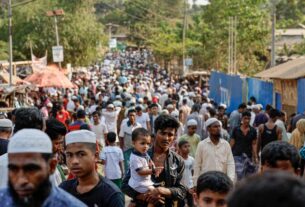
Rohingya survivors have given harrowing witness accounts at the International Court of Justice (ICJ), describing killings, rape, and the burning of children during Myanmar’s military crackdown. These testimonies are rare in inter-state cases and highlight the courage of survivors who traveled from refugee camps to The Hague.
Rohingya witnesses, supported by Legal Action Worldwide (LAW), spoke directly before the ICJ judges. LAW is an independent global organization that provides innovative legal assistance to survivors of human rights violations and advocates for accountability in some of the world’s most challenging contexts. One woman recounted how her husband and father-in-law were killed by Myanmar’s military. She described her child being taken from her arms, stabbed, and thrown into a fire. She also testified about being gang raped by soldiers.
The inclusion of Rohingya voices is unusual in ICJ proceedings, which typically focus on state-to-state arguments rather than individual testimonies. Their participation underscores the human dimension of the genocide allegations and strengthens the case for accountability.
The Gambia filed the case in 2019, accusing Myanmar of violating the Genocide Convention through systematic persecution of the Rohingya. The ICJ is tasked with determining Myanmar’s state responsibility for genocide.
Oral arguments concluded in early 2026, with both sides presenting evidence. The ICJ will now deliberate on whether Myanmar’s actions meet the legal definition of genocide.
Survivor testimonies provide vivid, personal evidence of atrocities that legal documents alone cannot convey. They counter Myanmar’s denials of persecution by presenting lived experiences.
Their courage to testify in The Hague demonstrates resilience and determination to seek justice. It sets a precedent for including victim voices in inter-state genocide cases.
Survivors face risks of re-traumatization and potential threats to family members still in Myanmar.
The ICJ can only rule on state responsibility, not prosecute individuals. Accountability for perpetrators would require separate proceedings at the International Criminal Court (ICC).
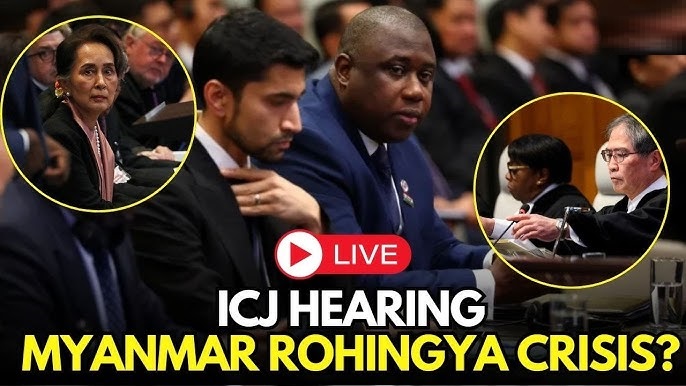
The judges have heard arguments of both sides and, in what is rare for an inter-State proceeding, directly from Rohingya witnesses, some of whom traveled from the camps in Cox’s Bazar, Bangladesh. These victims have been supported by Legal Action Worldwide (LAW), to ensure inclusion and participation of Rohingya in international justice mechanisms.
Witness NJ, from Chut Pying, shared a devastating account. In Court, she explained how her husband and her father-in-law were killed by the Myanmar military, how one of her children was taken from her arms and murdered, by being stabbed and then thrown into a fire before her very eyes. She bravely recounted how she was gang raped. This is what she said about her experience and role as a witness at the ICJ: “Myanmar has been rejecting what they did to the Rohingya. They have been saying that they didn’t persecute us. I was very happy that I could speak in front of Myanmar, and tell what they did to us, in front of them. If I need to go (testify) ten more times, I am ready to go. Also, I will recommend other victims to share what they faced or suffered, so that their hearts become calm.”
The Court also heard from witness MN, the sole Rohingya survivor of the horrific massacre of 87 men by the Myanmar’s military in the village of Maung Nu, during the 2017 genocidal “clearance operations”. In court, he described the piles of bodies, including those of his elderly father and his eight-year-old nephew. MN recounted his experience at the ICJ as follows: “I was there to speak the truth before the Court. Now that it is over, I feel a sense of relief and calm. Testifying was important to me because it ensured that the experiences of Rohingya victims are formally recorded and heard before an international court.”
Over the past three weeks – relying on evidence provided by UN bodies and independent NGOs – The Gambia’s counsel has brilliantly demonstrated how the atrocities described by the witnesses were not isolated incidents, but rather part of a carefully pre-planned and deliberately targeted state-led campaign towards the Rohingya, because of their religion and ethnicity. The Gambia was clear: the facts brought before the Court demonstrate the genocidal intent of the Myanmar military.
“Seeing Rohingya genocide survivors bravely testify in front of the Judges; seeing the Gambia’s counsel presenting facts in Court; having UN member states meet with victims and extend their support; observing the press, the public and the wider Rohingya community and other ethnic groups from Myanmar follow the case: it was profoundly moving”, said Antonia Mulvey, LAW’s executive director. “Moreover, it reinforced my deep conviction that, when states have the courage to act, UN bodies meticulously collect evidence, and front-line organizations work closely with victims, we can set justice in motion, seeking recognition. This is a reminder of the utmost importance, as we see increasing international crimes, conflict and attacks on international justice, globally. Let’s not forget our common responsibility to protect the most vulnerable.”
The ICJ is expected to render its decision within 6 to 12 months. LAW is thankful to the European Union and the Government of Canada, whose financial support has made our work possible.