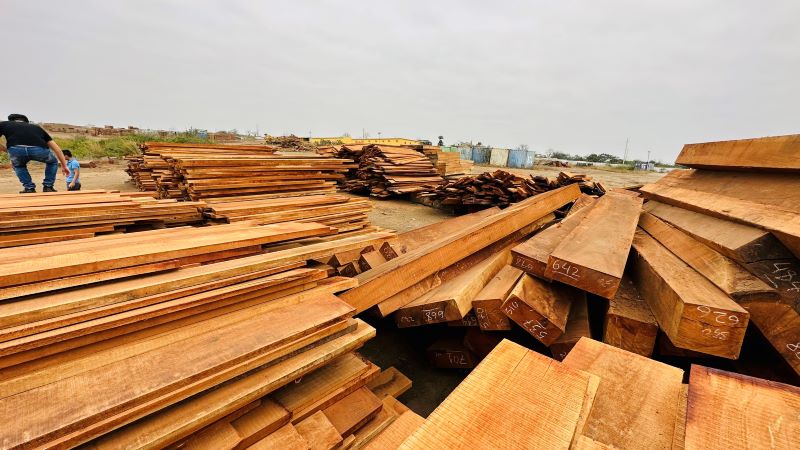
Timber prices in townships across Rakhine State controlled by the Arakan Army (AA) have increased by as much as five times compared to last year, according to local timber traders, who attribute the surge to high taxation.
Rakhine timber entrepreneurs mainly extract and sell locally sourced wood. Supplies are purchased from areas such as Thandwe, the Rakhine Yoma mountain range, Ann, the upper Lemro River region, and Taungup before being distributed to other townships.
A sawmill owner from Mrauk-U, who trades timber sourced from Thandwe, told Western News that prices have risen dramatically over the past year.
“Traders bringing timber from Thandwe say they must pay very high taxes at multiple checkpoints along the roads, which significantly increases our purchase costs,” he said. “Last year, low-grade timber sold for between 400,000 and 500,000 kyats per ton. This year, it is selling for around 2 million kyats per ton. Hardwood has jumped from 800,000 kyats per ton last year to 4 million kyats per ton this year. That’s a fivefold increase. We have no choice but to raise prices because our costs have gone up, and we also have processing expenses.”
According to timber producers, in addition to paying fees to the AA’s Central Tax Department, Forestry Department, and timber production licensing authorities, they must also pay taxes at numerous checkpoints.
A timber producer from Thandwe Township explained, “If we transport timber from Thandwe to sell in places like Mrauk-U, Kyauktaw, or Minbya, we must pay 5 percent of the timber’s value at every checkpoint. If there are three checkpoints, we pay 5 percent at each one. Without paying, we cannot pass. Even after paying forestry and central taxes, we still have to pay again at the checkpoints. This is why prices have increased.”
Producers added that the 5 percent checkpoint tax applies not only to timber from Thandwe but also to wood sourced from Ann, the upper Lemro River region, and Taungup. Some business operators are questioning whether these checkpoint collections are officially authorized by the relevant departments.
Housing Construction Becomes Increasingly Difficult
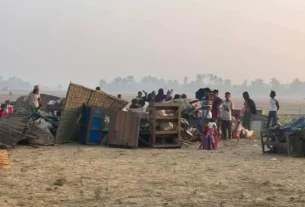
The sharp rise in both timber and cement prices has made home construction increasingly unaffordable for residents in Rakhine, according to a resident from Ponnagyun.
“With border trade routes disrupted and cement prices extremely high, people cannot afford to build houses. Even if we try to build with timber instead, timber is now more expensive than cement. It is very difficult to construct a home at this time. Securing proper shelter has become a serious challenge,” he said.
Previously, cement was transported into Rakhine from mainland Myanmar. However, due to transportation disruptions, cement is now being smuggled from Bangladesh and India. Border traders report that because the trade is unofficial—and cement shipments from Bangladesh are frequently seized—prices have soared.
Before fighting resumed in 2023, a bag of cement cost only tens of thousands of kyats. Currently, prices exceed 100,000 kyats per bag.
As the timber available in Rakhine is locally sourced, residents are urging the AA to consider reducing taxes and to prioritize policies that would make home construction more affordable for the public.
The Arakan Army (AA) reportedly collects taxes ranging from 5 percent to 10 percent on businesses operating in the townships under its control, including timber, trade, and other economic sectors, depending on the type of activity.