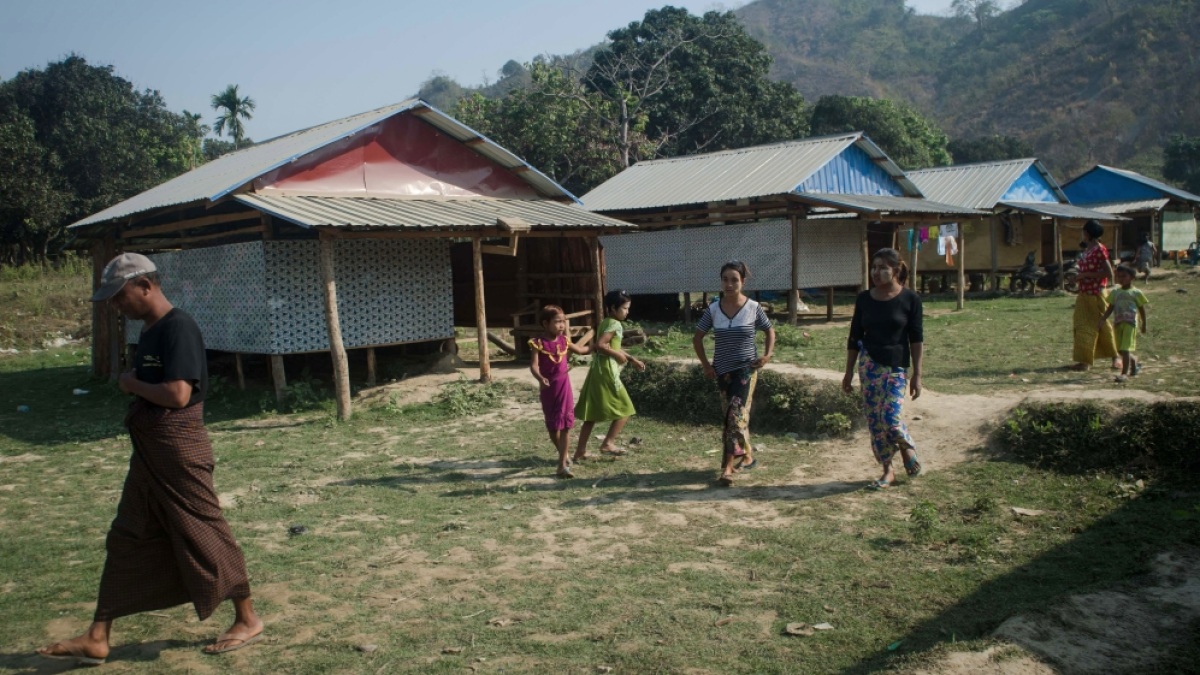
Rohingya residents in Maungdaw Township have accused the Arakan Army (AA) of entering abandoned homes and removing household property following recent clashes with the Myanmar military junta.
According to local sources, intense fighting between the two armed groups forced many Rohingya families to flee their villages in Maungdaw. While some displaced residents relocated to other parts of Maungdaw, others crossed the border into neighboring Bangladesh seeking safety. As a result, numerous homes have remained vacant for weeks.
Residents allege that AA members have since entered these empty houses and removed belongings, including furniture, water tanks, and other essential household items. Community members who stayed in nearby areas claim they have been barred from retrieving or selling property left behind — even when the homeowners are their immediate relatives.
“We fled because of the fighting,” one Rohingya man told local sources. “Now they say our homes are ownerless, but these houses belong to us. Everything inside is being taken.”
Another resident said fear has prevented families from speaking out publicly.
“They do not allow us to touch anything from our own homes,” the resident said. “Even if our parents built the house, we are told it no longer belongs to us.”
Announcement on Vacant Properties
Local residents further reported that AA authorities have announced that vacant Rohingya homes could be demolished and that properties without the original owners present would be classified as state property under their administration.
The reported declaration has intensified anxiety among displaced families, many of whom already face uncertainty regarding their ability to return to Maungdaw.
“We lost our land and our home,” a displaced Rohingya woman said. “Now even our small belongings are gone.”
Deepening Uncertainty Over Return and Property Rights
Rohingya residents say they remain unable to return safely to their villages due to continued instability in Rakhine State. At the same time, they fear permanent loss of their homes and personal belongings in the absence of legal safeguards or clear guarantees of property rights.
Community members stressed that they are seeking safety, the right to voluntary return, and protection of their property amid the ongoing conflict in the region.