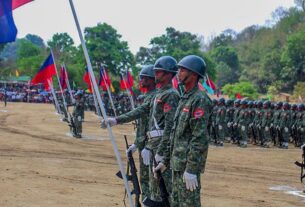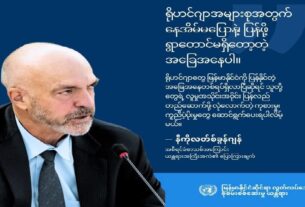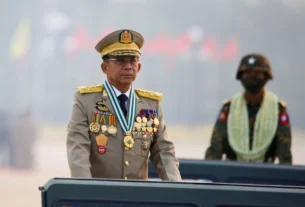
The call for sanctions against the Arakan Army (AA) underscores a critical escalation in Myanmar’s Rakhine State, where as stated by UN Special Rapporteur Tom Andrews. This push coincides with fresh diplomatic maneuvers amid clashes that have deepened the humanitarian catastrophe for Rohingya civilians, highlighting tensions between ethnic autonomy demands and broader human rights protections.
Escalating Conflict Dynamics
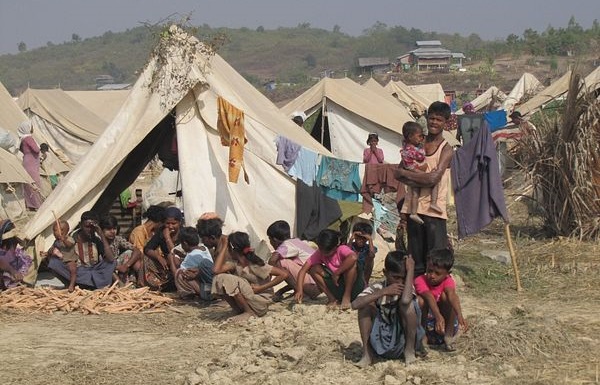
Intensified fighting in northern Rakhine since late 2024 has seen the AA accused of blocking Rohingya returns while engaging in forced recruitment and village burnings, actions that have stalled repatriation and worsened shortages of food and medicine. Over 700,000 Rohingya fled to Bangladesh after the 2017 crackdown, and recent hostilities have displaced another 40,000 as of February 2026, pushing camps in Cox’s Bazar to breaking point with overcrowding and disease risks. These developments reveal how state policy failures in Myanmar have allowed armed groups like the AA to fill power vacuums, transforming local resistance into barriers for minority human rights.
Diplomatic efforts, such as the UN-mediated talks in Dhaka on February 25, 2026, involving junta, AA, and Bangladesh representatives, aimed to broker ceasefires but exposed irreconcilable positions. The AA’s territorial control, gained through victories over the junta and rivals, now dominates Rakhine, where checkpoints hinder aid convoys and trap civilians in crossfire zones. This not only perpetuates displacement but also raises questions about whether state policy toward ethnic federalism can accommodate Rohingya claims without AA concessions.
Humanitarian Crisis Deepens
The toll on Rohingya communities is devastating, with malnutrition rates exceeding 20% in affected areas due to blocked supplies, and satellite imagery confirming at least 50 villages razed in February 2026 alone. Since 2017, UN estimates tally over 25,000 Rohingya killed or injured, with women and children forming 80% of the 1 million-plus displaced, many facing radicalization risks in Bangladesh camps vulnerable to floods and fires.
“Immediate international pressure on AA to cease hostilities and allow humanitarian corridors,”
Bangladesh’s Foreign Minister urged, capturing the desperation as new arrivals strain resources and fuel cross-border tensions.
These statistics illustrate a vicious cycle where violence begets more displacement, undermining human rights frameworks like the UN’s Responsibility to Protect. Aid agencies report AA-imposed restrictions mirroring junta-era blockades, leading to child mortality spikes and eroded access to education or healthcare. In this context, state policy in Myanmar—long criticized for discriminatory citizenship laws—has ceded ground to non-state actors, complicating global intervention and leaving Rohingya in perpetual limbo.
Historical Roots and AA Evolution
The AA, formed in 2009 as the armed wing of the United League of Arakan, initially sought Rakhine autonomy against Buddhist-majority dominance, surging post-2021 coup to control swathes of Rakhine and Chin States by 2025. What began as anti-junta resistance has shifted, with Rohingya evictions and conscription drawing parallels to the ethnic exclusivity the group once opposed.
“Defensive actions against junta and rival militias protect all Rakhine residents,”
an AA spokesperson claimed, framing their role as ethnic guardianship while dismissing Rohingya suffering as collateral.
This evolution ties into Myanmar’s fractured state policy, where post-independence centralization fueled insurgencies, and the 2017 genocide accusations against the military set precedents for accountability. Rohingya advocacy, including from the Arakan Rohingya Society for Peace, integrates into this narrative by demanding
“targeted sanctions and AA disarmament to enable returns,”
positioning the crisis as a failure of inclusive governance. The junta’s counterclaim, labeling AA a ‘terrorist group’ blocking national reconciliation efforts, further muddies waters, as both sides leverage human rights rhetoric selectively.
Sanctions Debate and Implications
Calls for AA sanctions, led by figures like Andrews, target leadership finances and arms to compel safe passage without broad civilian harm, potentially unlocking voluntary returns under UN oversight. Yet this approach carries risks: economic penalties could harden AA resolve, boosting recruitment or extremist alliances, much like sanctions on the junta inadvertently empowered rebels. Bangladesh’s corridor plea aligns with sanctions logic, but implementation hinges on trilateral enforcement amid ASEAN hesitancy.
Human rights considerations weigh heavily here—sanctions could affirm Rohingya agency against state policy vacuums, but failure to pair them with incentives risks entrenching divisions. Historical precedents, such as sanctions on Bosnian Serb leaders in the 1990s, show mixed results: pressure accelerated talks but prolonged suffering without diplomacy. In Rakhine, where AA dominance curbs junta influence, punitive measures might paradoxically stabilize anti-Rohingya dynamics unless tied to federalism reforms.
Geopolitical Ripples Across Borders
Bangladesh grapples with spillover, as 40,000 new displaced exacerbate trafficking and unrest in camps hosting nearly 1 million, prompting Delhi and Beijing’s scrutiny—India for border security, China for Belt and Road investments backing the junta. State policy in Dhaka, focused on repatriation, now intersects with global sanctions debates, potentially drawing UN Security Council action despite veto threats. Regional players like Thailand and Malaysia, via ASEAN, face pressure to mediate, but AA defiance suggests limited leverage.
For Rohingya, this means eroded identity amid statelessness, with human rights violations like arbitrary detention persisting across borders. Sanctions could internationalize the plight, fostering accountability akin to ICC probes into 2017 atrocities, yet AA’s ‘protection’ narrative risks framing them as necessary evils against junta overreach.
Challenges to Diplomatic Resolution
Dhaka talks symbolize hope but falter without enforcement, as AA blockades persist despite truces. Human rights monitors decry the lack of Rohingya voices at tables dominated by armed actors, echoing exclusionary state policy patterns. Pathways demand nuance: targeted sanctions with inclusion incentives, UN-monitored corridors, and multi-ethnic Rakhine frameworks to transcend AA hegemony.
Broader state policy reform in Myanmar—addressing citizenship, land rights, and power-sharing—is pivotal, as civil war fragments authority. Sanctions alone won’t suffice; they must catalyze dialogue where Rohingya aren’t pawns. As fighting rages, global inaction perpetuates a crisis blending ethnic strife with humanitarian collapse.
Long-Term Pathways and Risks
Envisioning resolution involves layered strategies: immediate sanctions to open corridors, mid-term ceasefires via Bangladesh-junta-AA mechanisms, and long-term constitutional overhauls for federalism. Human rights integration, through independent probes and reparations, counters impunity cycles. Risks loom if sanctions backfire, radicalizing fronts or inviting foreign meddling—China’s junta ties could counter Western moves, prolonging stalemate.
Ultimately, Rakhine’s fate hinges on balancing AA grievances with Rohingya protections within reformed state policy. As displacement mounts and aid falters, urgency defines the sanctions imperative—not as panacea, but catalyst for equitable peace. The world watches whether pressure translates to passage or perpetuates peril.