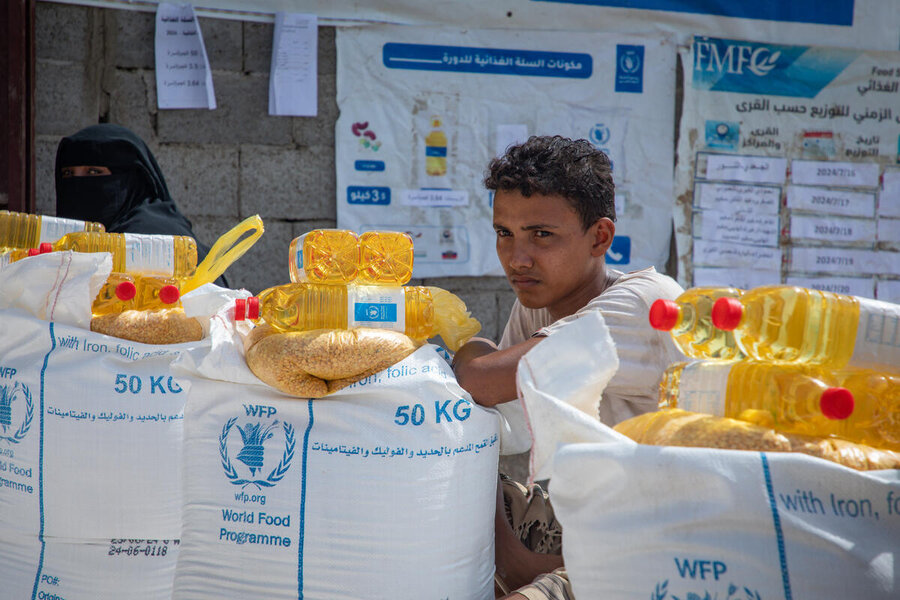
Cox’s Bazar Bangladesh — The United Nations World Food Programme (WFP) has launched its Targeting and Prioritisation Exercise (TPE) for monthly food assistance in Rohingya refugee camps, marking a shift towards needs-based support for nearly 1.2 million refugees residing in Cox’s Bazar and Bhasan Char.
The TPE revealed that while all Rohingya households remain food insecure, the severity of insecurity varies. Under the new approach, assistance is calibrated to household-level needs:
- Extremely food-insecure households: US$12 per person/month in Cox’s Bazar; US$13 in Bhasan Char
- Highly food-insecure households: US$10 and US$11 respectively
- Food-insecure households: US$7 and US$8 respectively
According to WFP’s food-gap analysis, even the lowest transfer value meets minimum food requirements. The new method aligns with global best practice for protracted humanitarian crises, prioritizing households with children, women, elderly without able-bodied adults, or persons with disabilities for the highest assistance levels.
Simone Parchment, acting country director of WFP, said: “Food assistance will continue for all camp residents, with resources prioritised for those in greatest need. Our analysis ensures that minimum food needs will be met for everyone.”
The TPE is not driven by funding shortages, but rather aims for equitable, proportionate, and effective allocation of resources, strengthening the Joint Response Plan for the Rohingya crisis amid global funding constraints.
Community engagement has been central to the process, with Rohingya perspectives incorporated into the food security analysis. Sensitisation campaigns have been ongoing since 1 March to foster understanding and acceptance.
The exercise is supported by recent US contributions via the Bangladesh Humanitarian Fund, and continued backing from the European Union, Australia, and other donors. This will enable uninterrupted food assistance until November 2026.
Beyond monthly food support—including for nearly 150,000 new arrivals since 2024—WFP delivers nutrition support for children under five, pregnant and breastfeeding women, school feeding programmes, and resilience and disaster-preparedness initiatives to strengthen community capacity.
The agency also provides resilience support to smallholder farmers in host communities, linking them to local markets and WFP supply chains for Rohingya response.
Parchment added: “Our partners’ solidarity ensures the continuity of lifesaving assistance. Until a lasting solution emerges, the Rohingya require ongoing support to protect lives, dignity and stability.”