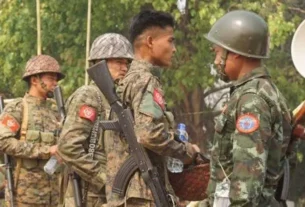
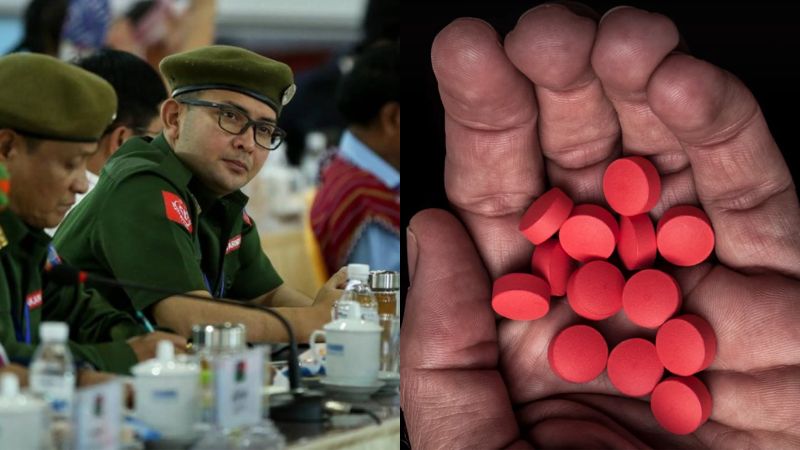
The Arakan Army, active in Myanmar’s Rakhine State, has drastically transformed its identity over the past few years. Once an ethnic insurgent group, it has now evolved into one of Asia’s largest and most dangerous narco-terrorist organizations. Recent intelligence reports and field data reveal that the Arakan Army is no longer fighting solely for political or military goals; rather, it has built a vast drug economy across South and Southeast Asia.
They have broken away from the traditional structure of Myanmar’s Golden Triangle and established a new Bay of Bengal–centered “Golden Triangle”, with an estimated annual revenue of around USD 1 billion or more. This massive income is being used to purchase advanced weapons, acquire drone technology, and run their so-called administrative system—posing an unprecedented security threat to the entire region.
At the center of this drug empire is the top leadership of the Arakan Army, who have emerged as mafia dons or drug lords under the cover of separatism. The organization’s chief commander, Twann Mrat Naing, is the supreme leader of this syndicate, controlling the criminal network under the guise of political struggle. His deputy, Brigadier General Nyo Twan Awng, a former medical doctor, acts as the main architect of the drug trade. Under his supervision, the international trafficking routes, money-laundering operations, and logistics networks are managed.
Additionally, top commanders such as Colonel Kyaw Myat and Colonel Kyaw Hsan directly oversee drug transport along the Bangladesh and India borders. Under their orders, raw materials and manufactured drugs from Myanmar’s Shan and Kachin States are transported to remote mountain laboratories in Arakan and Chin, processed, and then trafficked into neighboring countries.
For Bangladesh, the rise of the Arakan Army has created an existential crisis. Having gained exclusive control over Myanmar’s Western Corridor or coastal region, they now use the Teknaf and Cox’s Bazar border as their primary exit points. The group is brutally exploiting Rohingya refugees in this trade. On one hand, they conduct ethnic persecution to force Rohingya out of their homeland and then extort USD 3,000–5,000 per person as “fees to flee” during their escape. On the other hand, Rohingya who flee to Bangladesh or stay near the border are being forced to act as drug carriers or “mules.”
Intelligence sources further indicate that the Arakan Army is no longer limited to traditional boats; they now use small ‘narco-submarines’ capable of evading radar to deliver drugs to larger ships in deep sea. These shipments later reach Malaysia, Indonesia, and even Latin American cartels.
The primary victims of this drug network are the youth of Bangladesh. It is destroying our country from within. The government must take action against this drug-terror network.