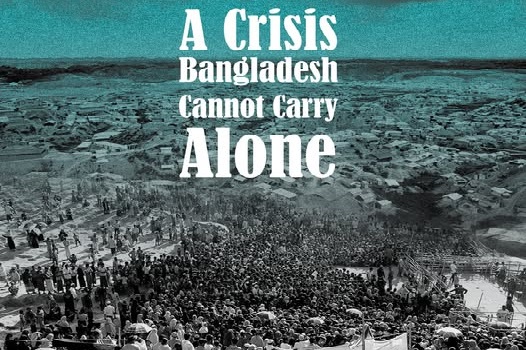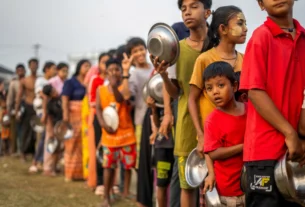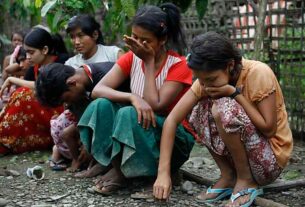
Bangladesh has become the main refuge for the Rohingya — a people driven out of Myanmar by violence.
In August 2017, Myanmar’s military launched a campaign in Rakhine State marked by killings, sexual violence, and villages set on fire. More than 730,000 Rohingya fled into Bangladesh within months. Combined with earlier displacement, the Rohingya population in Bangladesh now exceeds 1.2 million.
Most live in camps in Cox’s Bazar, one of the most crowded regions in the world. What began as emergency shelters — including Kutupalong and Balukhali — have grown into massive settlements where land is fragile, services are strained, and risks from floods, landslides, and disease are constant.
Bangladesh has responded with notable restraint and humanity.
Despite limited resources, the government, local communities, and aid agencies have provided shelter, food, healthcare, and education to one of the world’s largest refugee populations. But this is not a burden Bangladesh can carry alone.
The violence that caused this crisis is now before the International Court of Justice. In 2019, Gambia, backed by the OIC, accused Myanmar of genocide. UN investigations concluded that the military acted with intent to destroy the Rohingya as a group — claims Myanmar continues to deny.
Without international pressure, accountability, and sustained support, the crisis will only deepen. Bangladesh has given protection. Now the world must act — to secure justice, support host communities, and make safe, dignified repatriation possible.