By Aung San Oo
A trove of declassified and historical documents has surfaced, providing a chilling blueprint of the systematic oppression faced by the Rohingya community in Maungdaw, Rakhine State. These records do not merely reflect past administrative hurdles; they serve as a definitive paper trail of a decades-long campaign to dismantle the fundamental freedoms of a minority group through legislative strangulation.
The Weaponization of Family Planning
—
Perhaps the most egregious revelation within these documents is the state’s intrusion into the private lives of residents. Marriage, elsewhere a civil right, was transformed into a tool of control. Couples were forced to navigate a labyrinth of state permissions, adhering to strict age mandates—typically 25 for men and 18 for women.
More disturbing is the documented enforcement of a “two-child policy.” By placing a legal ceiling on births, authorities directly targeted the reproductive rights of the Rohingya, a move international observers characterize as a calculated effort to limit the growth of the population through coercive biological regulation.
Life Under the Lens: Restrictions on Movement
—
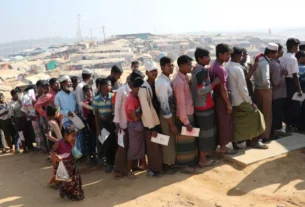
The documents detail a surveillance state where the simple act of traveling between villages required “temporary identification certificates” and explicit official sanctions. This was not merely about security; it was an architectural design of isolation. Compounded by long-standing curfews and constant census checks, the daily existence of the local population was monitored with a level of scrutiny reserved for those the state deems perpetual outsiders.
Persecution Masked as Procedure
—
Under the guise of “Population Control Measures,” the administrative orders outline severe penalties for those who dared to seek autonomy:
• Criminalized Marriage: Unsanctioned unions were met with imprisonment.
• Architectural Suffocation:
Strict bans were placed on the repair or construction of homes and religious buildings.
• Demographic Policing:
Constant household inspections were used to root out “unregistered” individuals, effectively criminalizing hospitality and family reunification.
The Architecture of Marginalization
—
While these policies were often branded under the veneer of “regional stability,” the evidence suggests a far darker objective: systemic marginalization. By citing “explosive population growth”—a metric applied selectively to this minority and not to the Buddhist majority—the state justified human rights violations as legal necessities.
Conclusion:
A Legacy of Policy, Not Rumor
—
These documents provide a sobering rebuttal to the claim that human rights abuses in Myanmar were merely incidental or anecdotal. Instead, they reveal a meticulously drafted policy of exclusion.
As the world continues to watch the evolution of Rakhine State, these historical records serve as a reminder that true peace and social justice can only be achieved by dismantling the institutionalized discrimination that was once written into the very laws of the land.