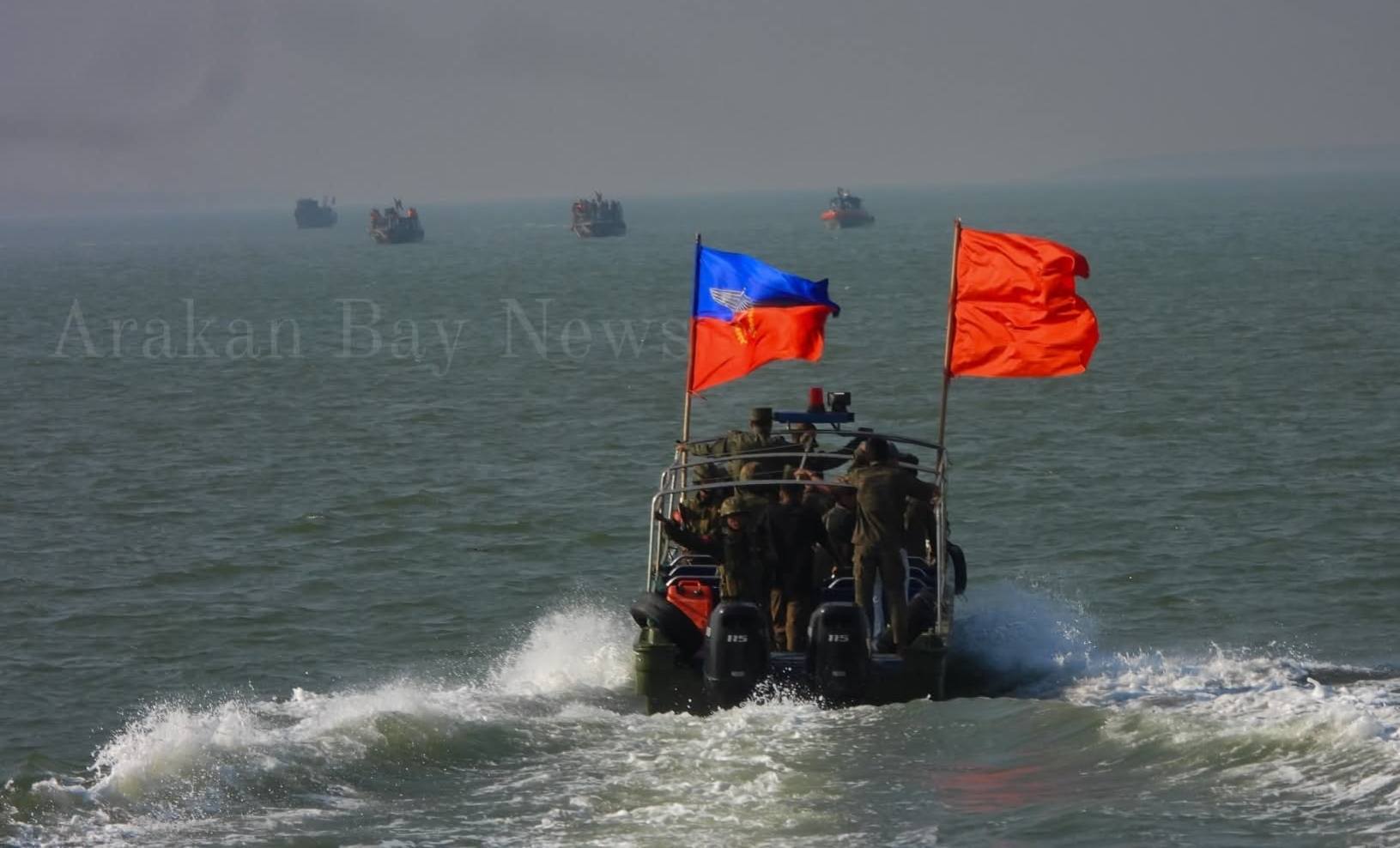
Far from sustained international scrutiny, hundreds of Bangladeshi citizens have reportedly been detained by the Arakan Army (AA), an ethnic armed organization operating in Myanmar’s Rakhine State. The majority of those affected are fishermen from coastal communities in Cox’s Bazar, whose livelihoods depend on the Naf River and the Bay of Bengal.
The Legal Perspective
The Arakan Army currently controls the vast majority of territory in Rakhine State and parts of Chin State’s Paletwa Township, where it administers areas through its political wing, the United League of Arakan (ULA), under the banner of the Arakan People’s Revolutionary Government (APRG). However, it has neither declared independence nor received formal diplomatic recognition from any state.
Under international law, the AA remains a non-state armed actor. Article 1 of the 1933 Montevideo Convention outlines the criteria for statehood, including a defined territory and the capacity to enter into relations with other states—conditions that the AA does not formally meet in the absence of recognition.
Furthermore, Article 2 of the 1982 United Nations Convention on the Law of the Sea (UNCLOS) provides that only recognized states may exercise sovereignty over territorial waters. As a non-state actor, the AA does not possess internationally recognized authority to enforce maritime boundaries or detain foreign nationals on such grounds. Publicly available evidence regarding alleged maritime boundary violations by Bangladeshi fishermen has not been presented.
International humanitarian law also prohibits hostage-taking in non-international armed conflicts. Common Article 3 of the 1949 Geneva Conventions applies to all parties in such conflicts, including non-state armed groups, and explicitly forbids the taking of hostages. Similarly, the 1979 International Convention against the Taking of Hostages and Article 8(2)(c)(iii) of the 1998 Rome Statute of the International Criminal Court classify hostage-taking during armed conflict as a criminal offense and, in certain circumstances, a war crime.
If the allegations are substantiated, the detention of civilians for ransom would raise serious legal concerns under these frameworks.
The Political Perspective
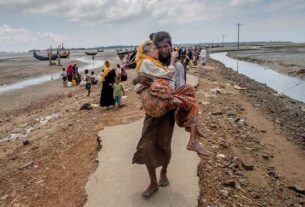
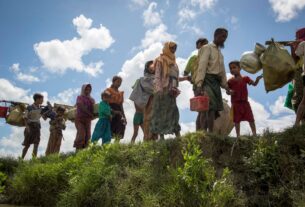
Since the escalation of Myanmar’s civil war following the 2021 military coup, Bangladesh has sought to maintain neutrality while managing significant spillover effects. The capture of Rohingya-populated areas in northern Rakhine, including Maungdaw District, by the Arakan Army has coincided with renewed violence and displacement. More than 150,000 additional Rohingya refugees have reportedly entered Bangladesh in recent months, adding to an already displaced population exceeding 1.5 million.
Bangladesh has also reported other cross-border tensions, including stray shelling incidents, disruptions to cross-border trade, and disputes over taxation and recruitment. The large-scale detention of Bangladeshi fishermen, however, represents a particularly sensitive escalation.
Dhaka traditionally emphasizes diplomacy and non-confrontation in its foreign policy. Some analysts argue that continued detentions risk undermining bilateral stability and eroding goodwill. For the Arakan Army, which controls territory directly adjacent to Bangladesh and relies on cross-border access for trade and humanitarian flows, sustained tension could prove strategically costly.
The Humanitarian Perspective
The overwhelming majority of detainees are reportedly low-income fishermen supporting extended families. Their detention imposes acute financial and psychological burdens on already vulnerable households. Families often sell land, livestock, or assets to meet alleged ransom demands, further deepening poverty.
Former detainees have described harsh conditions, though independent verification remains limited due to restricted access. Prolonged uncertainty has inflicted emotional trauma on families awaiting news of missing relatives.
At a time when Rakhine State itself faces a deepening humanitarian crisis, rights advocates argue that the detention of foreign civilians risks compounding suffering rather than advancing political objectives. They contend that any armed movement seeking legitimacy must adhere to international humanitarian norms, particularly regarding the protection of civilians.
The Path Forward
Observers suggest that de-escalation is in the interest of all parties. For Bangladesh, securing the safe return of its citizens remains a priority. For the Arakan Army, building constructive regional relationships—particularly with its only immediate land and maritime neighbor—may be essential for long-term political sustainability.
Immediate release of civilian detainees, transparent communication mechanisms, and structured cross-border maritime coordination could help prevent further incidents. Without such steps, a largely overlooked crisis risks evolving into a more serious diplomatic and humanitarian confrontation.
In the shadows of a protracted regional conflict, the fate of hundreds of fishermen underscores a stark reality: geopolitical struggles often fall hardest on the most vulnerable.