Yangon
The International Committee of the Red Cross (ICRC) has reported reaching more than half a million people across Myanmar in 2025, as armed conflict, displacement, natural disasters, and the threat of explosive hazards continued to drive widespread humanitarian needs.
In its latest Facts and Figures report covering January to December 2025, the ICRC outlined a broad range of emergency and longer-term assistance delivered in partnership with the Myanmar Red Cross Society and other local partners.
Strengthening Livelihoods and Food Security
Economic assistance remained a central pillar of the ICRC’s response. Around 139,000 people received support to restore food production through the distribution of seeds, tools, and organic fertilizers. More than 105,000 individuals benefited from emergency rations aimed at improving food consumption.
Additionally, over 137,000 people received essential household items—including blankets and hygiene kits—while more than 12,000 individuals were provided with direct cash or in-kind assistance to meet daily needs.
Expanding Access to Water, Shelter, and Health Care
Access to basic services continues to be a major challenge in conflict-affected regions. The ICRC reported that approximately 150,000 people gained improved access to safe drinking water, while 55,000 individuals received shelter assistance.
Healthcare support was also expanded. The organization assisted 48 hospitals, clinics, and rehabilitation centers with infrastructure upgrades to ensure reliable energy and water supplies. It further supported 30 facilities operated by Myanmar’s Ministry of Health and facilitated emergency referrals for nearly 17,000 patients. More than 13,000 people received emergency medical treatment from ICRC-supported teams.
Addressing the Threat of Landmines and Explosive Hazards
Landmines and unexploded ordnance remain a persistent danger in many parts of Myanmar. Nearly 5,000 people with disabilities accessed physical rehabilitation services through ICRC-supported programs, including 1,892 survivors of explosive hazards. The organization provided more than 2,300 prosthetic and orthotic devices during the reporting period.
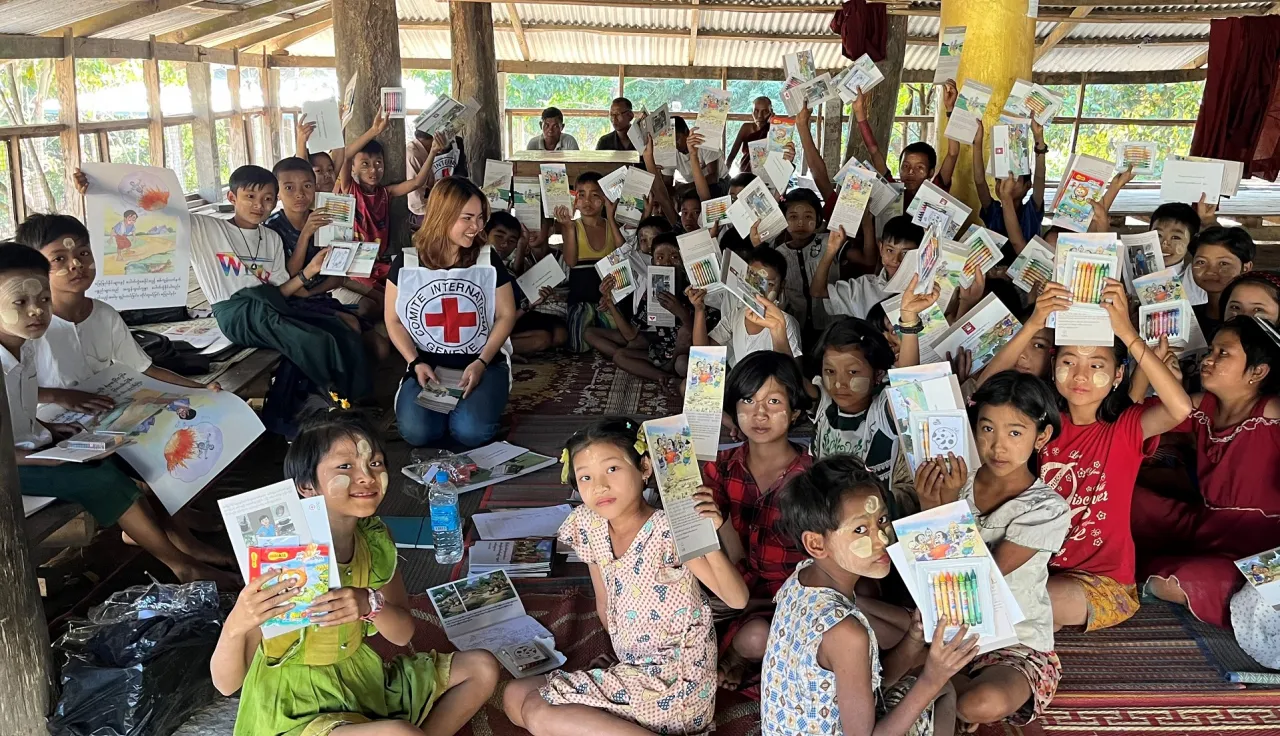
To promote safer behavior, the ICRC conducted 1,790 risk-awareness sessions on landmines and unexploded ordnance, reaching approximately 74,000 people. It also distributed more than 76,000 informational materials aimed at reducing exposure to explosive risks.
Neutral and Independent Humanitarian Mandate
The ICRC emphasized that its neutral, impartial, and independent mandate under the Geneva Conventions remains central to its operations. The organization reaffirmed its commitment to delivering assistance “wherever people are and whatever the circumstances,” amid an increasingly complex and protracted humanitarian crisis in Myanmar.
As conflict and displacement continue to affect communities nationwide, humanitarian actors warn that sustained access and support will be critical to addressing the growing needs of vulnerable populations.