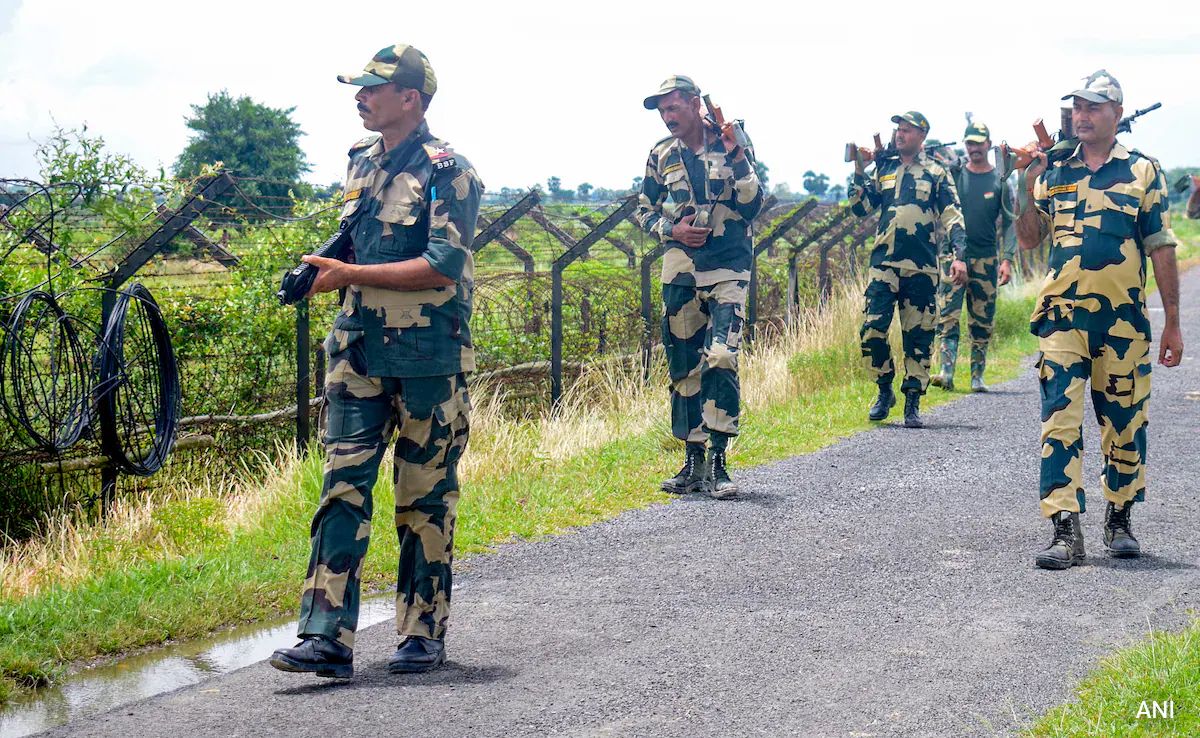
The Bangladesh–India border stretches over 4,000 kilometres, cutting across rivers, fields, and villages. It is not just a line on a map; it is a living space where history, family, and survival intersect. Yet for many, it has also become a place of fear. Over the decades, repeated incidents of killings by India’s Border Security Force (BSF) have turned this frontier into a symbol of unresolved tension and human suffering.
The most recent incident, in which another Bangladeshi life was lost, has once again shaken public conscience. It is not an isolated case. Data from recent years reveals a troubling pattern. In 2025 alone, 34 Bangladeshis were reportedly killed, following 30 in 2024 and 31 in 2023. The trend reflects a rise in fatalities, with the highest number in recent times recorded in 2020 at 51 deaths. Over the past 16 years, around 607 people have died, while nearly 1,000 Bangladeshis were killed between 2001 and 2010. These numbers are not just statistics; they represent human lives, families, and stories cut short.
According to World Atlas, the Bangladesh–India border is now considered the fifth most dangerous border in the world, despite being shared by two historically friendly countries. This stands in contrast to the nature of their long-standing relationship. Unlike conflict-driven borders, this one reflects an unexpected reality. The most dangerous border globally is between South Korea and North Korea, followed by the India–Pakistan border. In this context, the Bangladesh–India border’s ranking raises important concerns, highlighting ongoing tensions and human security issues that would otherwise be expected to be resolved through cooperation and peaceful coexistence.
For decades, Bangladesh and India have held numerous meetings, border conferences, diplomatic dialogues, and joint working groups to address this issue. Promises have been made to bring such incidents down to zero. Yet despite these commitments, the killings continue. This raises a difficult but unavoidable question: why do these incidents persist despite clear understanding at the highest levels?
To understand this reality, one must look beyond numbers and into the lives of people living along the border. Since the partition of the subcontinent in 1947, many families have remained divided between the two countries. Even today, relatives live just a few miles apart but are separated by fences and formalities. For many poor villagers, obtaining passports and visas is not easy. Some attempt to cross informally, not for crime, but to meet loved ones, attend funerals, or maintain family bonds. Their actions may be technically illegal, but they are deeply human.
Another layer of complexity is cross-border economic activity. In many border areas, livelihoods depend on small-scale trade, informal exchanges, and sometimes smuggling. Not all those involved are criminals; some are simply trying to survive, managing food or basic goods in regions where opportunities are limited. Others may be part of organised networks. However, in most cases, these activities do not pose a serious security threat that would justify the use of lethal force.
This is where the central concern arises. Even if someone crosses the border illegally or is involved in smuggling, there are legal procedures to address such actions. Arrest, detention, and trial exist as established methods of justice. The use of deadly force against unarmed civilians is widely seen as disproportionate and a violation of fundamental human rights. It raises serious questions about accountability, justice, and respect for human dignity.
Some incidents have left a deep mark on public memory. In 2011, the killing of Felani Khatun, a teenage girl who died after being shot while caught on a barbed wire fence, sparked outrage across Bangladesh and beyond. Such events are not easily forgotten; they become symbols of a larger problem.
What makes the situation even more painful is the historical relationship between Bangladesh and India. During the 1971 War of Independence, India played a crucial role in supporting Bangladesh. That contribution remains deeply respected by the people of Bangladesh. Over the years, the two countries have developed strong ties in trade, energy, and regional cooperation. This friendship makes the continuation of border killings difficult to understand – and even harder to accept.
Bangladesh, on its part, has generally shown restraint. Its border forces have avoided escalation and relied on diplomatic channels to address disputes. However, repeated incidents risk creating frustration among citizens and may generate tension between the two nations.
The border itself is not a simple line; it passes through densely populated areas, farmlands, and even homes. People live, work, and survive in proximity to it. These realities demand a humane and sensitive approach to border management. Strict enforcement without understanding local conditions can lead to tragic outcomes.
The way forward requires both sincerity and action. First, there must be a clear and strictly enforced policy against the use of lethal force on unarmed civilians. Non-lethal methods, better surveillance, and stronger coordination should be prioritised. Second, accountability is essential. Every incident must be investigated transparently, and those responsible must face consequences. Without accountability, promises lose meaning. Third, both countries need to invest in the development of border areas. Poverty and lack of opportunity often drive people toward risky activities. Improving livelihoods, education, and infrastructure can significantly reduce such risks. Fourth, continuous dialogue and cooperation must go beyond formal meetings and translate into real changes on the ground.
Ultimately, there needs to be a shift in perspective from controlling borders through fear to managing them with humanity. Borders should not become places where ordinary people risk their lives. Instead, they should represent cooperation, understanding, and peaceful coexistence.
In the end, the continued loss of lives along the Bangladesh–India border is not just a policy issue – it is a human tragedy. It raises serious moral and legal questions that cannot be ignored. There is no justification for the killing of unarmed civilians. Justice demands fairness, restraint, and respect for human life. The question remains: how long will this continue, and what does it achieve? For two neighbouring countries with a shared history and mutual interests, the answer must lie in compassion, accountability, and a genuine commitment to ensuring that the border becomes a place of peace, not pain.