In close coordination with the Government of Bangladesh, the United Nations and its partners have renewed their appeal for international assistance. They have requested US$710.5 million to meet the most urgent needs of Rohingya refugees living in camps in Cox’s Bazar and Bhasan Char, as well as the host communities.
This appeal comes amid growing global instability and mounting humanitarian pressures, which have made prioritization increasingly difficult and placed essential services for vulnerable populations under threat. Until a durable solution is achieved, Bangladesh has continued to generously host the refugees. Therefore, sustained international support is crucial to reinforce Bangladesh’s efforts.
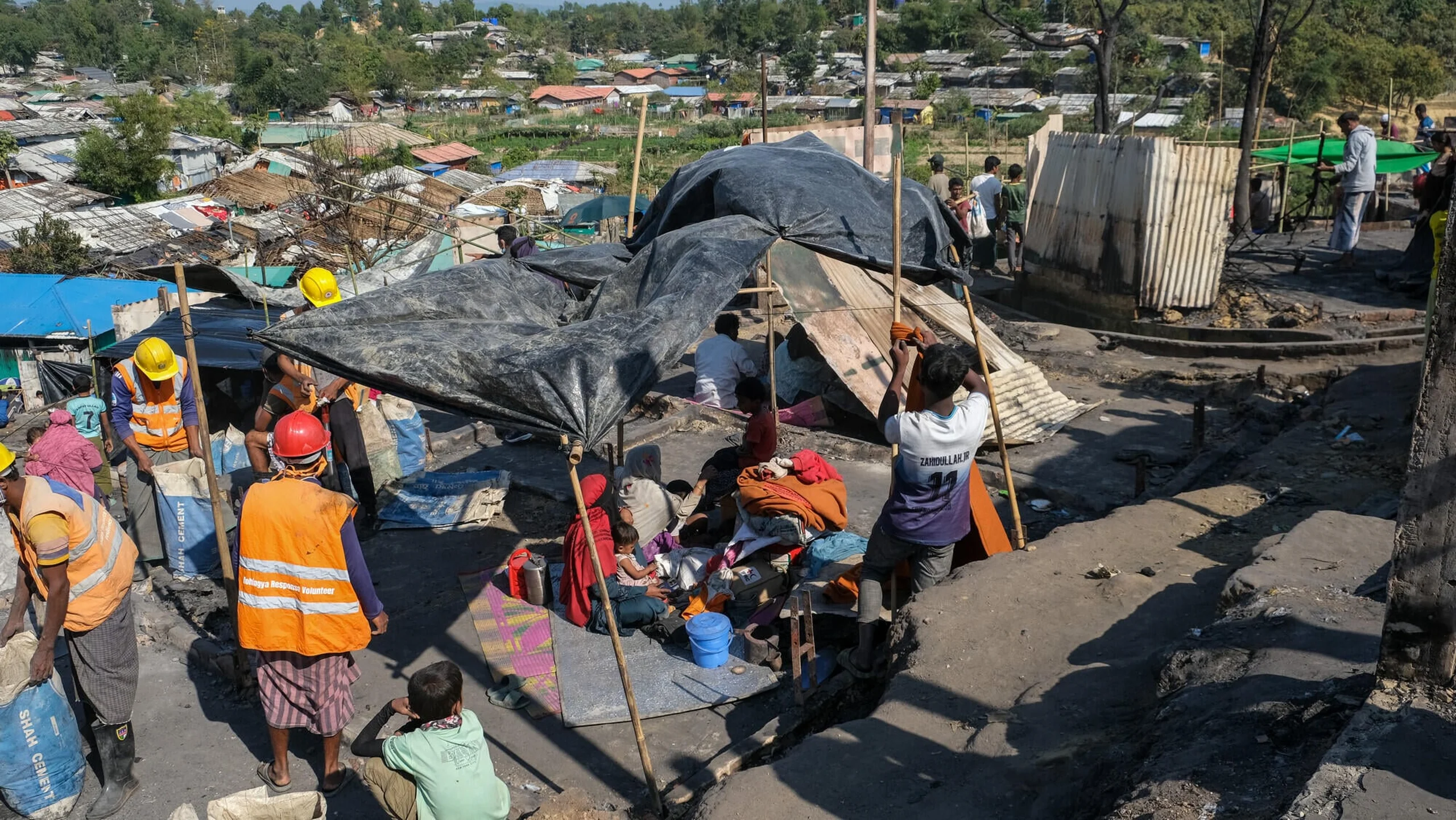
Nearly a decade after fleeing targeted violence and persecution in Myanmar, approximately 1.2 million Rohingya refugees are currently sheltering in Bangladesh. Ongoing conflict in Myanmar continues to force more people to flee, steadily increasing humanitarian needs. Since the beginning of 2024, nearly 150,000 newly arrived Rohingya have entered Bangladesh, placing additional strain on limited humanitarian resources and worsening overcrowding in the camps.
The updated 2026 Joint Response Plan (JRP) for the Rohingya humanitarian crisis is highly prioritized and limited in scope. It aims to provide assistance to approximately 1.56 million people, including refugees and Bangladeshi host communities. The US$710.5 million appeal is 26 percent lower than the 2025 appeal and represents only the minimum amount required to sustain life-saving assistance.
The funding request includes:
- US$247.3 million for food assistance
- US$128 million for shelter
- US$61.2 million for water, sanitation, and hygiene (WASH)
- US$52.7 million for education
- US$49.9 million for health services
- US$35.1 million for livelihoods and skills development
In addition, US$36.2 million is allocated across sectors to support affected local communities.
From 2017 through the end of 2025, the international community contributed approximately US$5.42 billion in humanitarian funding for the Rohingya response, with the United States remaining the largest donor. This support has enabled Bangladesh to maintain life-saving assistance and achieve significant progress in refugee education, health, and protection. However, major humanitarian needs remain, and without continued international solidarity, Rohingya families risk losing hard-won gains.
Kelly T. Clements, Deputy High Commissioner of the UN Refugee Agency (UNHCR), said:
“As resources become more constrained, supporting refugees to strengthen their skills and resilience is more important than ever, enabling them to achieve greater self-reliance, sustain hope, and rebuild their lives.”
She added:
“Until the Rohingya can safely return home and rebuild their communities in Myanmar, we must continue providing them with protection, care, and dignity where they are now. At a time of declining resources, the humanitarian community is working hard to deliver assistance as efficiently as possible. But needs remain immense, and the real impact of funding reductions on both refugees and host communities cannot be solved by efficiency alone. Helping refugee communities become more self-reliant remains a critical goal.”
Rania Dagash-Kamara, Assistant Executive Director for Partnerships and Innovation at the World Food Programme (WFP), said:
“Bangladesh has shown extraordinary generosity in hosting this highly vulnerable population. We are deeply grateful to our donors involved in this response. Their continued support serves as a lifeline for refugees.”
She continued:
“Based on the actual and evolving needs in the camps, WFP is working to ensure assistance is delivered equitably, efficiently, and effectively. But humanitarian assistance is not the end goal. Rohingya refugees want to return to their homeland in Myanmar when they can do so safely, voluntarily, and with dignity. We must continue supporting the conditions that make this possible. We cannot allow this crisis to be forgotten.”
Nyaradzayi Gumbonzvanda, Deputy Executive Director of UN Women (Normative Support, UN System Coordination and Programme Results), said:
“The needs of Rohingya refugees, especially women and girls, remain enormous. The impact of funding cuts is already being felt in every aspect of daily life in the camps.”
She added:
“Within the broader challenges of displacement, women and girls face heightened risks and barriers that require sustained attention. A gender-sensitive, women-centered, comprehensive, and adequately resourced system is essential. It must recognize the urgent needs for safety, dignity, inclusion, and protection from gender-based violence, which are critical to building resilience across the entire community.”
Due to severe reductions in humanitarian funding and declining development assistance, Rohingya refugees remain heavily dependent on aid. In 2025:
- About 35 percent of camp households relied entirely on humanitarian food assistance.
- 42 percent had temporary and unstable sources of income.
- Only 23 percent earned income through cash-for-work opportunities under humanitarian programs.
Limited economic opportunities and declining assistance are having devastating effects on Rohingya families, especially newly arrived refugees and vulnerable groups, including women, girls, persons with disabilities, and older people.
As conflict continues inside Rakhine State, hopes for an early return to Myanmar are fading. With conditions deteriorating, more refugees are resorting to desperate measures, including dangerous and often deadly sea journeys in search of opportunities elsewhere in the region. According to records, 2025 was the deadliest year for such journeys. Just last month, a boat carrying more than 270 passengers sank; most were refugees, and only nine survivors were reported.
Against this backdrop of increasing and multidimensional pressures, the appeal focuses on the most urgent humanitarian needs. Assistance must be strategically prioritized among the growing refugee population. Investing in refugees’ resilience and self-reliance is critical to preserving dignity and hope while reducing long-term dependence on aid.
The updated 2026 Joint Response Plan (JRP) was presented at the UN House in Dhaka by Kelly Clements (UNHCR), Rania Dagash-Kamara (WFP), Nyaradzayi Gumbonzvanda (UN Women), Bangladesh’s Acting Foreign Secretary and Secretary for International Organizations M. Farhadul Islam, and UN Interim Resident Coordinator Carol Flore. The appeal is supported by 98 humanitarian partners, including 52 Bangladeshi organizations.
The appeal follows a four-day joint high-level donor mission led by Kelly T. Clements and Rania Dagash-Kamara, bringing together representatives of major international donors. The mission included a two-day visit to Rohingya camps and host communities in Cox’s Bazar, with participation from Australia, Canada, the European Union, France, the Netherlands, Sweden, and the United Kingdom. Delegates also engaged with government officials, UN agencies, NGO partners, and the broader donor community in both Cox’s Bazar and Dhaka.
The humanitarian community once again emphasized that the most desirable and sustainable solution to the Rohingya crisis remains the voluntary, safe, dignified, and sustainable repatriation of refugees to Myanmar. Until conditions in Myanmar become conducive to return, continued international solidarity and support remain essential—not only as a humanitarian obligation but also to protect human rights, maintain regional stability, and ensure that refugees and host communities are not neglected.