International Criminal Court: Expand Investigation to Include Arakan Army Massacre of Rohingya in Hoyyar Siri
New evidence details the Arakan Army massacre of Rohingya civilians in Rakhine State
The International Criminal Court (ICC) should expand its ongoing investigation in Myanmar to include new evidence of a of Rohingya civilians by the Arakan Army (AA), an ethnic armed organization in Myanmar’s Rakhine State, said Fortify Rights today.
U.N. member states should also urgently prioritize targeted sanctions against the AA and its commanders implicated in serious human rights violations.
A new Fortify Rights investigation documents the killing of scores of Rohingya civilians by the AA on May 2, 2024, in Hoyyar Siri, also known as Htan Shauk Khan village in Buthidaung Township, Rakhine State.
“This horrific massacre in Hoyyar Siri adds to the growing evidence of Arakan Army persecution of the Rohingya in Rakhine State,” said Peter Bouckaert, Senior Director at Fortify Rights. “The International Criminal Court has an ongoing investigation that should be expanded to include the Arakan Army’s crimes. This could not only bring accountability for Rohingya victims but also serve as a deterrent to future atrocities.”
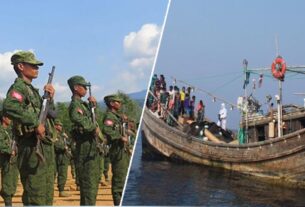
Since November 2023, the AA has made major territorial gains against the Myanmar military junta in Rakhine and Chin states. In May 2024, the AA took control of large parts of Buthidaung Township, a predominantly Rohingya area of northern Rakhine State. Since then, Fortify Rights has documented consistent AA abuses of ethnic Rohingya, including arbitrary detention, torture, arson attacks, forced labor, and killings of Rohingya, as well as another large-scale massacre of Rohingya civilians in August 2024.
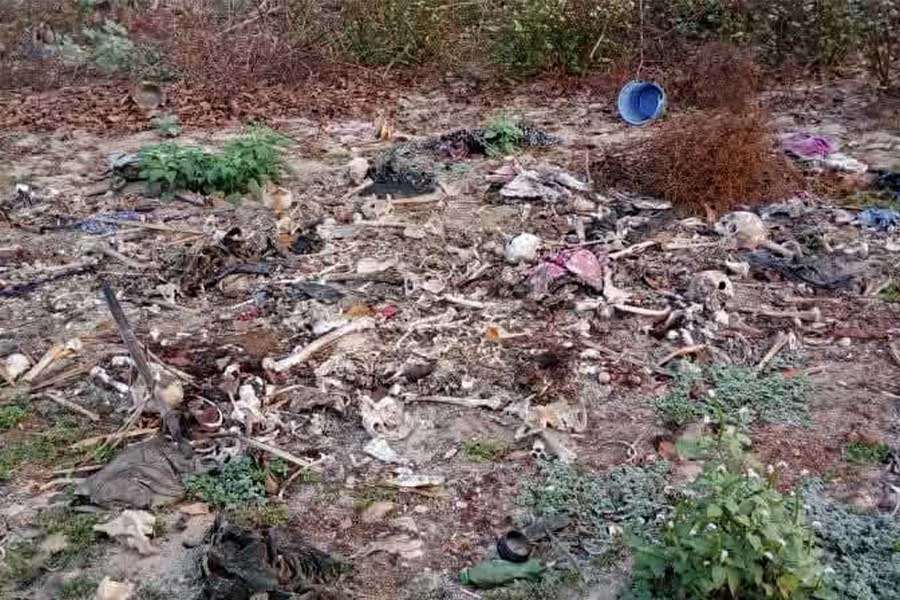
Between March and November 2025, Fortify Rights interviewed 15 Rohingya survivors, eyewitnesses, and others with direct knowledge of the Hoyyar Siri massacre in Rakhine State, Myanmar and those who fled to Malaysia and Bangladesh. Fortify Rights also reviewed and analyzed photographic evidence of the massacre’s aftermath. Evidence of the Hoyyar Siri massacre has been slow to emerge due to the AA’s tight control of the area, intimidation of survivors, and their deliberate attempts to manage media coverage of their atrocities.
Approximately two weeks before May 2, 2024, sustained armed clashes occurred between Myanmar junta forces and the AA in eastern Buthidaung Township. On May 3, as part of its broader offensive to seize control of Rakhine State, AA forces reportedly captured a military base belonging to the junta’s Light Infantry Battalion 551 near the village of Hoyyar Siri.
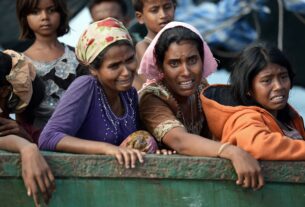
Earlier, on the evening of May 1, the AA made an announcement via loudspeaker in both the Rakhine and Rohingya languages ordering all Hoyyar Siri villagers to evacuate. The villagers gathered their belongings and began leaving the village before dawn on May 2, according to interviews conducted by Fortify Rights with Rohingya residents.
The villagers evacuated in at least two large groups, numbering in the hundreds: one group fleeing westward toward downtown Buthidaung, and the other fleeing eastward toward Thein Taung and U Hla Hpay villages. According to multiple eyewitnesses and survivors, in the morning of May 2, 2024, AA forces stopped the first group beside the main road heading toward downtown Buthidaung before opening fire on them, killing scores of Rohingya civilians.
“Rashid Ahmed,” 27, survived the Hoyyar Siri massacre though seven of his nine family members were killed by the AA. He described the killings to Fortify Rights:
After we left the village. … We encountered a main road with high embankments and [road] drainage systems on both sides. On one side of the road, the AA members were positioned; on the other side, the remaining Burmese [junta] soldiers who hadn’t surrendered were hiding. We, the civilians, were stuck in the middle.
At that point, we were ordered to sit down. … [A]fter a moment, we heard a voice from the walkie-talkie in the pocket of an AA soldier. It said, “Aalone go thet plai!” [which means, “kill them all” in the Rakhine language].
All of us heard it and we understood what it meant. We were frozen and trembling in fear. … They [the AA] fired three shots in the air at first. We got really scared. After a while, they started firing at us.
Rashid Ahmed witnessed AA forces shoot his mother and brother, after which he fainted in shock but survived.
AA forces shot “Rahima,” a 40-year-old woman, four times. She survived and told Fortify Rights that her husband and their children were part of the same group of civilians as Rashid Ahmed, attempting to flee Hoyyar Siri toward downtown Buthidaung on May 2. She said:
Some survived the initial gunfire. My mother-in-law was shot [dead], and I covered her body. I had already been hit by four bullets. I saw my husband and one of my children lying underneath me, wounded but still breathing. My other children, five sons and one daughter, were all shot dead.
She continued:
I lost one daughter and initially thought she had been taken by the AA, as many girls and women have been abducted. After the first round of shooting, another group [of AA fighters] came 8 to 10 minutes later, shooting at the survivors. My husband was still alive. I pretended to be dead when the AA soldiers came to check me. They left, and I survived. My husband sought forgiveness from me, and I cried silently. After seeking my forgiveness, he prayed to Allah, asking what he had done wrong. The AA troops heard him and shot him again, killing him.
Despite her injuries, Rahima reached the nearby village of Thein Taung in Buthidaung Township, where she received medical treatment and was reunited with her daughter—the only other surviving member of her family. While staying in the village, AA officers came to visit Rahima:
I remained in Thein Taung village for 11 months. AA officers visited multiple times, including female officers. They questioned me about the killings and forced me to say the Burmese [junta] military, not the Rakhine and AA, was responsible. They photographed and filmed my injuries. Two months later, they returned with similar questions about my family, including my husband’s name and my daughter’s age. Despite being forced, I repeatedly answered truthfully: the killings were carried out by Rakhine people, and I was shot by them [the AA].
After nine months in the village, on a Friday, village leaders were summoned to the AA office and questioned about me and my daughter. After returning, [redacted] warned me that my life and the safety of his villagers were at risk, and I had to relocate immediately.
Rahima and her daughter were taken to Bangladesh, where they remain today as refugees.
“Arof,” 38, another Hoyyar Siri resident, recalled seeing multiple groups of dead bodies as he fled the village:
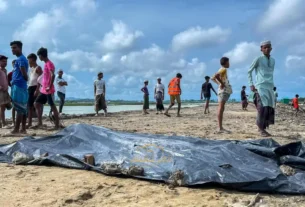
As I fled through the rice fields, I saw multiple groups of dead bodies: first a group of five, then a group of three, and then a single body. In another area, a lower-lying rice field, I saw between ten and fifteen dead bodies, though I could not ascertain the exact number. From the moment I left my home until the time I was apprehended by the AA, I estimate I saw approximately forty dead bodies. Among them were men, women, and children.
“Ali,” 25, survived the Hoyyar Siri massacre and fled to Hpon Nyo Leik village, located about four miles away, where he remained in hiding for weeks. However, he quickly realized the AA was searching for those who escaped. He said:
The AA called the village administrators and told them to report if any survivors from Hoyyar Siri village came to their villages. When I survived the massacre and fled to Hpon Nyo Leik village, after around fifteen days, I heard the announcement on the loudspeaker saying, “Any survivor from Hoyyar Siri must come and report to the village admin.” I hid and stayed in the Hpon Nyo Leik village until I heard the announcement. I realized I was in danger. Then, I immediately left for Samila village to catch a boat heading to Malaysia.
Ali ultimately reached Malaysia, where Fortify Rights interviewed him. He said the AA killed seven of his family members—including both of his parents—in the massacre.
“Rahmad,” 27, a Rohingya from Buthidaung Township, said the AA built internment camps near Keya Zinga Para [Ah Twin Hnget Thay] and Shilgada [Kyauk Seik] villages, and relocated the remaining residents of Hoyyar Siri to the camps, sealing off the village as a “red zone” and barring their return. He told Fortify Rights:
Remaining villagers have been relocated between Keya Zinga Para (Ah Twin Hnget Thay) and Shilgada (Kyauk Seik) [village]. The AA didn’t allow them to go back. And they blocked the main road that passes through Hoyyar Siri. No one can pass through it. It’s a “red zone” now. People have to use an alternative way if anyone wants to go Hpon Nyo Leik.
Fortify Rights has consistently documented and exposed instances of AA war crimes and persecution against the ethnic-Rohingya population in areas under its control, including a massacre of Rohingya civilians near the Naf River in Maungdaw Township on August 5, 2024, and an arson attack on Rohingya homes in May 2024. The AA has denied these allegations and has yet to take responsibility or hold its troops accountable for these crimes. In January 2025, the AA did publicly admit that its soldiers had tortured and summarily executed two prisoners of war – a war crime under international humanitarian law—after video emerged of the uniformed AA soldiers killed the prisoners.
In an August 2025 report, the U.N. Office of the High Commissioner for Human Rights also documented the massacre in Hoyyar Siri, also known as Htan Shauk Khan, in Rakhine State, Myanmar:
In an incident in Htan Shauk Khan village, Buthidaung Township, Rakhine State, on 2 May 2024, in which hundreds of civilian casualties were reported, multiple sources alleged that over 1,000 Rohingya villagers had fled in fear of possible clashes. Witnesses described having been stopped by Arakan Army elements, divided into three groups in paddy fields and fired upon, with the death of scores. One interviewee depicted the scene as “a river of blood. … I saw shooting. I saw mass killing. It was a lot of guns, people were shot in the legs and chest”. Another survivor recounted the killing of 20 relatives, including 3 children.
In September 2025, the Burmese Rohingya Organisation UK (BROUK) petitioned the Federal Court in Buenos Aires to expand its universal jurisdiction case on the Rohingya genocide to also include atrocity crimes by the AA, including the killings in Hoyyar Siri.
International humanitarian law—also known as the laws of war—is applicable to all parties to the conflict in Rakhine State and the broader conflict in Myanmar, which constitutes a non-international armed conflict. In particular, the Geneva Conventions outline fundamental rules governing the conduct of armed conflict. Serious violations of the Geneva Conventions are considered war crimes, which can incur individual criminal responsibility, including via the ICC.
Common Article 3 of the Geneva Conventions protects civilians in a non-international armed conflict, stating, “Persons taking no active part in the hostilities …. shall in all circumstances be treated humanely, without any adverse distinction founded on race, color, religion or faith, sex, birth or wealth, or any other similar criteria.”
The Rome Statute of the ICC states that in the context of non-international armed conflicts, the Court has jurisdiction over serious violations of Common Article 3 including “Violence to life and person, in particular murder of all kinds, mutilation, cruel treatment and torture.”
On November 14, 2019, ICC judges granted the Chief Prosecutor jurisdiction to investigate and possibly prosecute the crime against humanity of forced deportation of Rohingya to Bangladesh, and related crimes. While the jurisdiction for the Court’s investigation stems from the Rohingya genocide of 2016 and 2017, its investigation is indefinite in scope, and can include any individual or group deemed responsible for perpetrating the forced deportation of Rohingya to Bangladesh.
The ICC Chief Prosecutor should include the AA’s attacks on Rohingya civilians as part of his ongoing investigation, said Fortify Rights.
“Thousands of Rohingya have had to flee the AA’s atrocities and have sought safety in Bangladesh, thereby bringing these crimes into the ICC’s existing jurisdiction,” said Peter Bouckaert. “The Court must now seek accountability for the AA’s crimes and its ongoing persecution of the Rohingya.”