India’s Migrant Deportation Drive Fuels Anxiety Along Bangladesh Border
Residents of Bangladesh’s southwestern border districts are growing increasingly concerned as India intensifies its campaign to deport undocumented migrants, raising fears of humanitarian and security challenges in the region.
Mohammad Ismail Hossain, a 66-year-old rice farmer from the Khulna-Jessore border area, worries that the escalating situation could destabilize the peaceful communities where generations have lived and worked.
“India says those identified as Bangladeshi nationals will be sent back only after proper verification,” Hossain told AFP. “But it seems that no verification is taking place. People are simply being pushed across the border from every direction.”
Border Communities Caught in the Middle
Bangladesh and India share a 4,096-kilometre border, one of the longest international frontiers in the world. Many communities along the border have deep historical, cultural, and family ties that predate the 1947 partition of British India.
In some areas, families live on both sides of the border, and informal cross-border movement has been common for decades. Poverty, limited access to documentation, and long-standing migration patterns have left many residents without sufficient proof of citizenship.
Local residents fear that growing tensions could eventually lead to violence.
“If the situation worsens, there could be larger conflicts and even gunfire,” Hossain warned. “India is the larger country and can exert pressure whenever it wants.”
Political Changes and Increased Deportations
Human rights organizations argue that India’s deportation efforts have intensified following the recent political shift in West Bengal, where Prime Minister Narendra Modi’s Hindu nationalist party secured power for the first time.
The West Bengal government has established detention facilities and claims to have expelled nearly 5,000 individuals identified as “Bangladeshi infiltrators.”
Critics, however, allege that the campaign disproportionately targets Bengali-speaking Muslims and that citizenship verification procedures are often inadequate.
Bangladesh Tightens Border Security
The increased deportation efforts have created tensions between Dhaka and New Delhi.
Bangladesh authorities have strengthened border patrols and instructed security personnel to prevent unauthorized entries.
Mahmudul Hasan, a Bangladeshi border commander, stated that Bangladesh is prepared to receive its citizens only after their nationality has been jointly verified by both countries.
“We are willing to accept our citizens once proper verification has been completed,” Hasan said. “However, we cannot accept unidentified individuals. Rules must apply to everyone, including undocumented persons.”
According to Bangladeshi officials, border guards have blocked at least 35 attempts since June 5 to push migrants into Bangladesh without formal verification.
Indian authorities maintain that deportees are returned only after it has been established that they entered India illegally and are Bangladeshi nationals.
Humanitarian Concerns Growing
As deportation operations continue, humanitarian concerns are mounting.
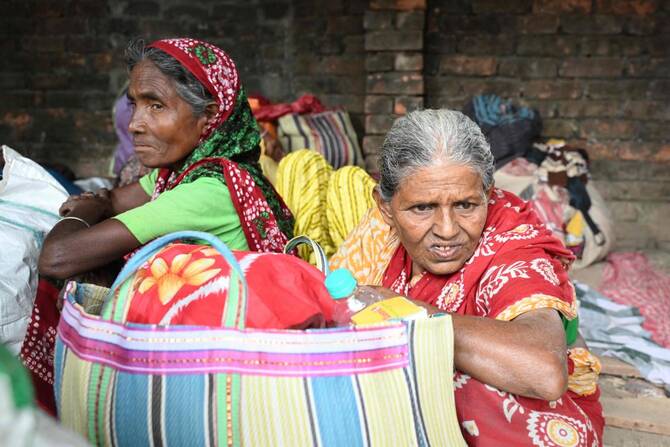
Many undocumented migrants reportedly remain stranded in border areas, uncertain of their legal status and future.
In Satkhira, Mohammad Mohiuddin is recovering from injuries he says were inflicted by Indian border personnel while attempting to cross into Bangladesh.
“They struck me in the eye with a rifle butt and then shot me,” he alleged. “I do not deserve such treatment.”
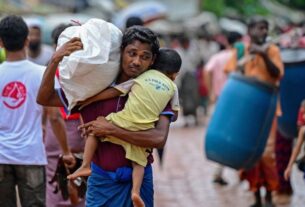
Meanwhile, reports indicate that women and children have spent days stranded in the “zero line” buffer zone between the two countries, relying on local villagers for food and water.
Videos circulating on social media show families gathered near border fences while Indian and Bangladeshi authorities dispute responsibility for them.
Concerns Over Rohingya Refugees
Rights groups also fear that Rohingya refugees could become entangled in the ongoing deportation campaign.
Bangladesh already hosts more than one million Rohingya refugees who fled persecution and conflict in neighboring Myanmar. Any additional influx would place further strain on the country’s resources and social infrastructure.
Humanitarian organizations warn that deportation policies must ensure proper identification procedures to prevent stateless individuals or refugees from being forcibly relocated.
Families Separated Across Borders
For many families, the consequences of detention and deportation extend far beyond the border itself.
Human rights groups report that at least 20 Bangladeshi children were repatriated in May while their parents remained imprisoned in India on charges related to illegal entry.
Among them is 14-year-old Sumi Khatun, who says she and her younger sister were separated from their mother and brother after being detained.
“My father’s grave is in Delhi, my mother and brother are in different jails in India, and my sister and I are now in Bangladesh,” she said.
Born in India to Bangladeshi parents, Sumi claims she lacks the documents needed to prove her place of birth.
Reflecting on her family’s separation, she expressed only one wish: to be reunited with her loved ones.
“I never want to return to India,” she said. “I only want my mother and brother back so we can live together again.”